pressure-washing
How to Choose a Pressure Washing Company in Oregon
Choosing a pressure washing company in Oregon comes down to soft wash knowledge, CCB and insurance checks, fair pricing, and the red flags to avoid.
In This Article
- The Damage a Bad Operator Can Do
- Soft Washing vs Pressure Washing, and Why Oregon Cares
- Licensing and Insurance to Verify in Oregon
- Questions That Reveal a Professional
- What Pressure Washing Costs in Oregon
- Timing the Work in an Oregon Year
- Red Flags That Should End the Conversation
- Common Questions From Oregon Homeowners
How to Choose a Pressure Washing Company in Oregon
Oregon might be the easiest state in the country to sell pressure washing in. Nine months of rain west of the Cascades grows moss on roofs, algae on siding, and black slime on driveways, so by the time the sun comes out in June, half the houses in Portland, Salem, and Eugene look like they need a bath. Demand like that attracts everyone from excellent full-time exterior cleaning companies to a guy who bought a machine at a big-box store last weekend.
The difference between those two matters more here than in drier states, because so many Oregon surfaces are easy to destroy with high pressure. Cedar siding, composite roof shingles, painted lap siding on older Portland homes, and soft older concrete all get ruined by an operator who thinks more pressure means cleaner. Hiring well is mostly about learning to spot the companies that know when not to blast.
This guide walks through the checks that separate professionals from machine owners: methods, licensing, insurance, the questions worth asking, fair pricing for Oregon, and the red flags that should end a conversation.
The Damage a Bad Operator Can Do
High pressure in the wrong hands takes years off a home's exterior in an afternoon. On asphalt and composite shingles, it strips the protective granules that give the roof its lifespan, and a roof that gets pressure washed at full power can lose five or more years of service life while looking clean in the photos. On wood, it gouges soft grain and forces water deep into siding, and on painted surfaces it peels paint that then needs a full prep and repaint.
Water intrusion is the quieter damage. An aggressive wand aimed upward at lap siding drives water behind the boards, into wall cavities, and around window flashing, and the rot shows up two winters later with no obvious cause. Etched concrete, shredded window screens, and stripped deck stain round out the usual claims.
None of this means pressure washing is dangerous when done right. It means the machine is the least important thing the company brings, and the judgment about pressure, distance, tips, and chemistry is what you are paying for.
Soft Washing vs Pressure Washing, and Why Oregon Cares
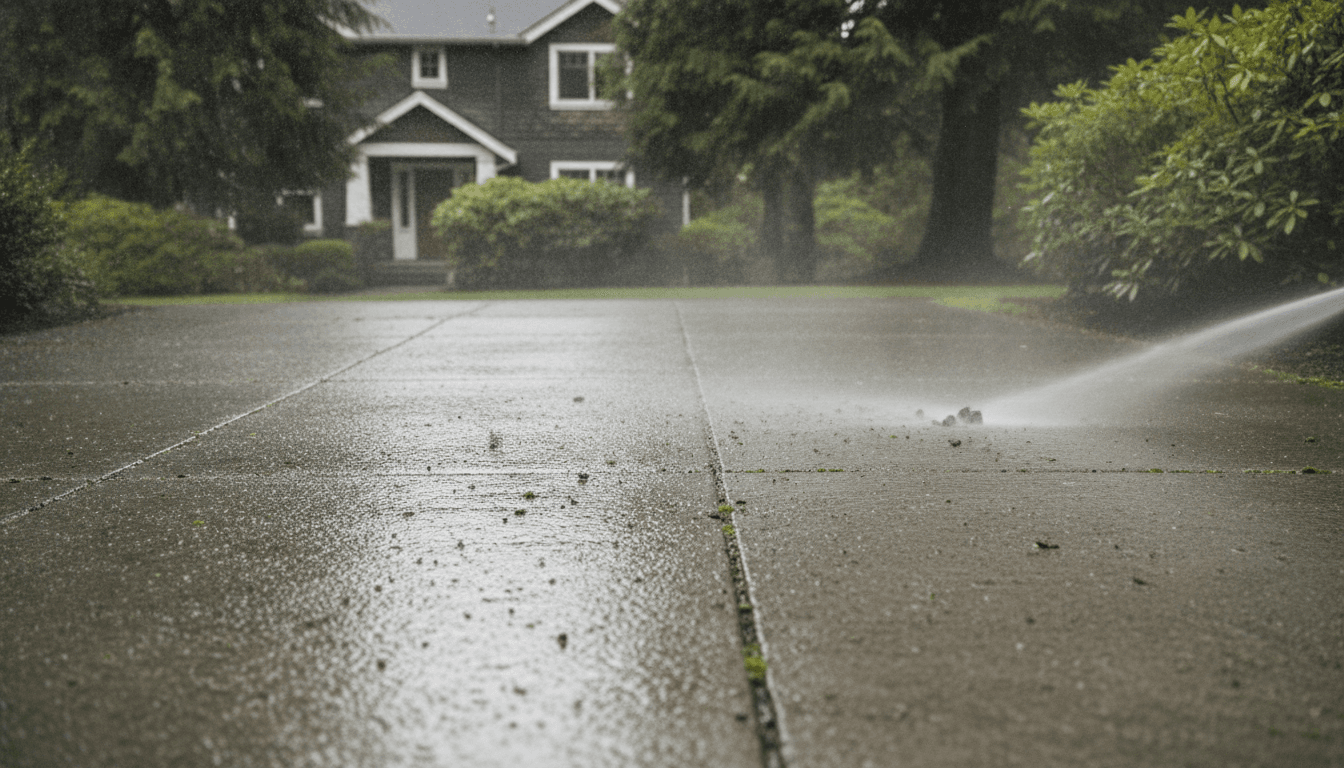
Soft washing uses low pressure, roughly what a garden hose delivers, combined with cleaning solutions that kill moss, algae, and mildew and let rinsing do the work. It is the correct method for roofs, painted siding, cedar, stucco, and most vertical surfaces on a house. High pressure belongs on hard horizontal surfaces: concrete driveways, sidewalks, paver patios, and some stone.
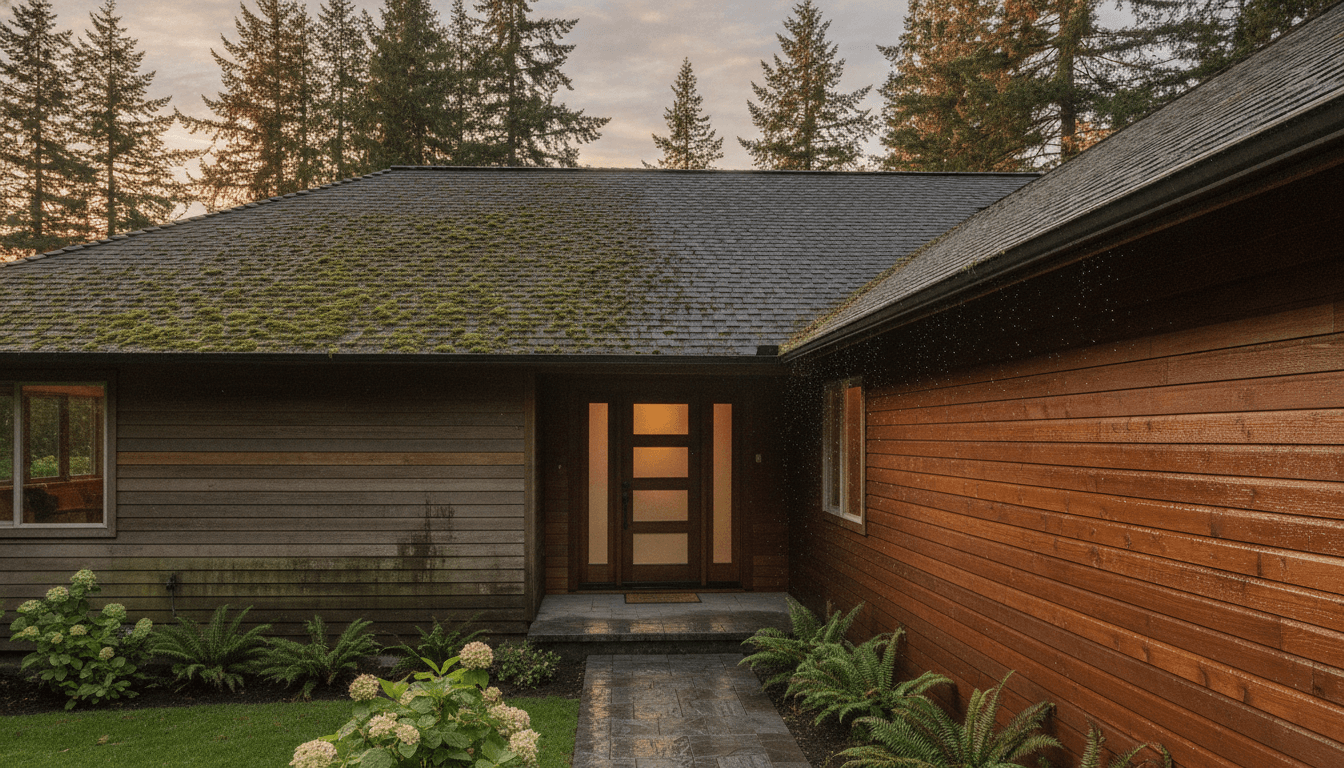
Oregon's signature problem, roof moss, should almost never meet a pressure washer. The right treatment is a soft wash or a dry application of moss-killing product, followed by patience while the dead moss releases and washes off in the rain over the following weeks. A company that promises to blast your composite roof spotless in one visit is offering to shorten its life.
Ask any company you interview which method they would use on each surface of your home. The right answer sorts itself: soft wash for the roof and siding, pressure for the flatwork, and a clear explanation of why. Companies that give one answer for everything are telling you they own one tool.
Licensing and Insurance to Verify in Oregon
Oregon regulates contractors through the Construction Contractors Board, and many exterior cleaning companies carry a CCB license because parts of their work, such as roof cleaning and preparation for painting, touch CCB territory. A CCB number on the truck and website is a good sign, and you can verify any license and its complaint history on the state's public lookup in about a minute. Some outfits that only wash flatwork operate legally without one, so treat the license as a strong plus rather than an automatic disqualifier.
Insurance is not optional at any level. Ask for a certificate showing general liability coverage, ideally $1 million or more, and workers compensation coverage if the company has employees. A worker hurt on your roof without workers comp coverage can become your problem, and a cracked window or damaged roof without liability coverage definitely will.
Established companies expect these questions and answer them fast. Hesitation, excuses, or a certificate that names a different business than the one quoting you are all information.
Questions That Reveal a Professional
A few minutes of questions before booking tells you most of what you need. Good companies enjoy answering them, because the answers show off their process.
- What cleaning solutions do you use, and how do you protect plants, pets, and koi ponds from runoff?
- How do you handle wash water near storm drains, since Oregon municipalities restrict what can flow into them?
- What pressure and tips will you use on my roof, siding, and driveway, and why?
- Is the quote based on a site visit or photos, and what exactly does it include?
- Do you guarantee your work, and what happens if streaks or missed spots show up after you leave?
Listen for specifics. A pro talks about sodium hypochlorite percentages and surfactants, pre-wetting plants, downstream injection, and surface cleaners for concrete, while an amateur talks about horsepower. The runoff question matters doubly in Oregon, where cities including Portland enforce rules about detergent-laden water entering storm systems, and careless companies create liability for the homeowner.
What Pressure Washing Costs in Oregon
A full house soft wash on a typical single-story to two-story Oregon home runs roughly $250 to $550, with larger homes and three-story Portland four-squares pushing higher. Driveway cleaning usually lands between $100 and $300 depending on size and staining, and a driveway-plus-house package is the most commonly quoted bundle in the Willamette Valley.
Roof moss treatment prices on its own scale, typically $400 to $900 for treatment and gentle cleaning of an average roof, more for steep pitches or heavy accumulation. Decks, fences, gutter exteriors, and patios each add $100 to $350 depending on square footage. Coastal homes from Astoria to Coos Bay often pay somewhat more, since salt residue and heavier growth make for slower work.
Beware of quotes dramatically below these ranges. Cut-rate operators make the math work with speed, and speed with a pressure washer is exactly how granules, stain, and paint end up in your flower beds.
Timing the Work in an Oregon Year
Late spring through early fall is prime season west of the Cascades, once the rain lets up enough for surfaces to dry and companies to schedule reliably. House washing before summer means you get the clean look through the months you spend outside, and washing ahead of any exterior painting project is standard prep. East of the mountains in Bend or Redmond, the season runs longer and the growth pressure is lighter.
Moss treatment plays by different rules. Fall and winter applications work well because the products do their killing during the wet months when moss is actively growing, and the winter rain rinses the dead material off gradually. The best roof outcomes in Oregon often come from a fall treatment and a spring assessment.
Book earlier than feels necessary. The first stretch of sunny June weather fills every reputable company's calendar for weeks, and the outfits with same-day availability in peak season are available for a reason.
Red Flags That Should End the Conversation
Door-to-door solicitation with a truck conveniently in the neighborhood is the classic one, especially when it comes with a today-only price. Reputable Oregon companies build their books on reviews and repeat customers, and they do not need to pressure you on your porch. Cash-only demands, no written quote, and no physical address or verifiable business name belong in the same bin.
On the technical side, walk away from anyone who wants to pressure wash a composite roof at full power, quotes your home sight unseen without conditions, or cannot name their insurance carrier. A company that badmouths soft washing as a gimmick has confessed that it does not own the equipment.
Trust the paperwork over the pitch. The companies that send a written scope, a certificate of insurance, and a real invoice are the same ones that show up on time and fix mistakes. You can compare notes with our other hiring guides for exterior cleaning services, and there are more contractor vetting checklists on our home services blog.
Common Questions From Oregon Homeowners
How often should I have my house washed in Oregon?
Every one to two years for siding west of the Cascades, where algae returns fast, and every two to three years in Central and Eastern Oregon. Roofs need moss treatment on their own cycle, typically every couple of years depending on tree cover.
Can pressure washing remove the black streaks on my roof?
Those streaks are algae, and the fix is a soft wash treatment rather than pressure. The streaks fade over weeks as the treatment works and rain rinses the residue, so do not expect an instant before-and-after on shingles.
Is it cheaper to buy a pressure washer and do it myself?
For flatwork like driveways and patios, DIY with a rented or consumer machine is reasonable if you use a surface cleaner attachment and moderate pressure. Roofs and full house washes are worth paying for, since ladders, chemistry, and technique are where homeowners get hurt and homes get damaged.
Do I need to be home during the service?
Generally no, as long as gates are unlocked, windows are closed, pets are inside, and cars are out of the work zone. Most Oregon companies send arrival notifications and photos of completed work, which is another small thing the professional operations get right.