pest-control
How Much Does Pest Control Cost in Oregon? (2026 Price Guide for Ants, Rodents, and Moisture Pests)
Pest control costs in Oregon for 2026: ant and carpenter ant treatment, rodent exclusion, crawl space work, wasp removal, and service plan pricing.
In This Article
- Moisture Drives Almost Everything West of the Cascades
- Odorous House Ants: The Most Common Oregon Call
- Carpenter Ants and Structural Damage
- Rodents and Keeping Them Out
- Wasps, Spiders, and the Seasonal Calendar
- What a Service Plan Includes
- Licensing, Insurance, and Comparing Bids
- Common Questions About Oregon Pest Control Pricing
How Much Does Pest Control Cost in Oregon? (2026 Price Guide for Ants, Rodents, and Moisture Pests)
Ants generate more pest control calls in Oregon than every other pest combined, and a single targeted treatment for odorous house ants runs $175 to $375. Recurring service plans, which is what most households west of the Cascades end up buying, cost $45 to $80 a month with a larger initial visit of $150 to $350.
Carpenter ants are the expensive version of the same problem, and treatment runs $350 to $850 once nests are located inside the structure. Rodent exclusion, the work that keeps mice and rats out rather than just killing the ones inside, lands at $500 to $1,600 on an average home.
Oregon's pest profile is a moisture profile. Eight months of rain in the Willamette Valley and along the coast keeps crawl spaces damp, siding wet, and framing at moisture levels that attract exactly the insects that damage buildings. East of the Cascades, in Bend and Redmond and the high desert, the problem list changes completely.
Moisture Drives Almost Everything West of the Cascades
Odorous house ants, moisture ants, carpenter ants, and dampwood termites all share a preference for wet wood. That is why the same houses call every spring, and why a treatment that ignores the water source works for one season and fails the next.
Crawl spaces are the center of it. A crawl space with no vapor barrier, standing water after a wet week, or a slow plumbing leak becomes a nursery, and the ants are following the moisture rather than the kitchen counter. Fixing the water is pest control.
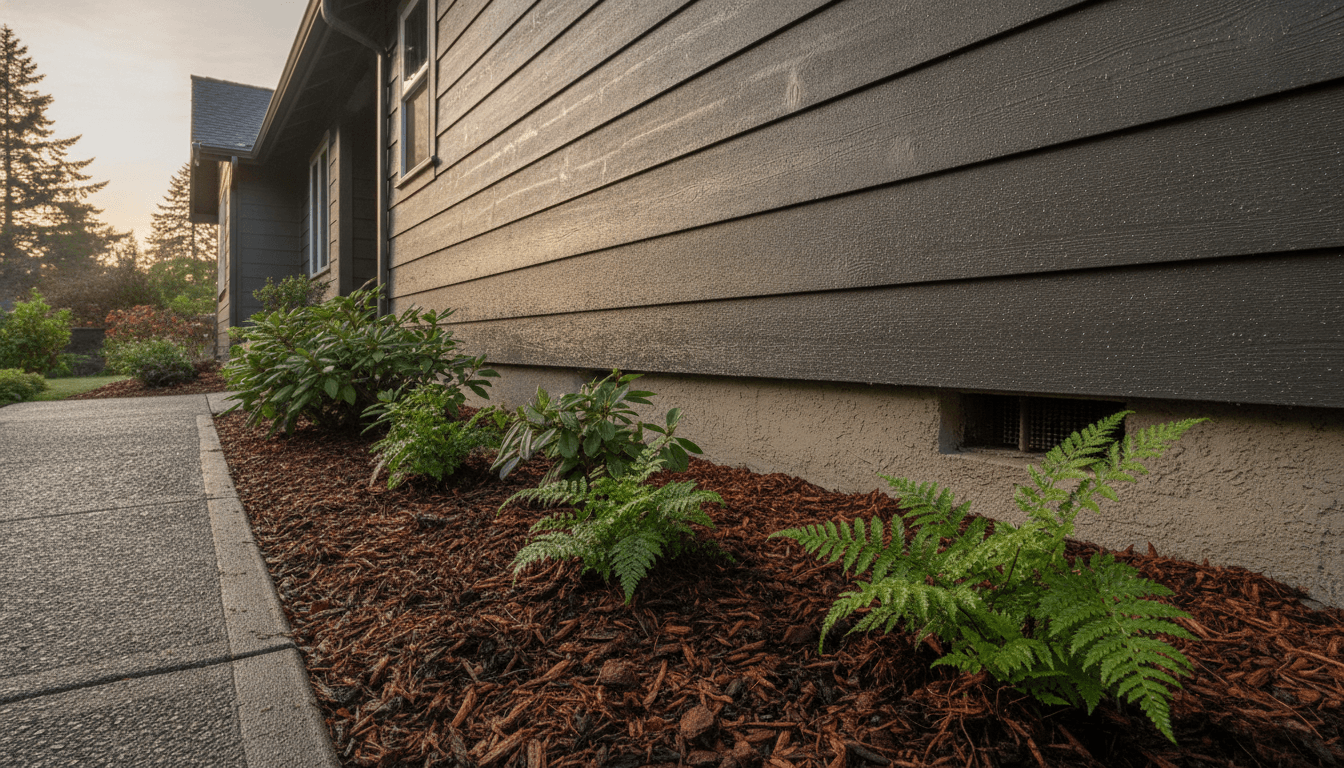
Gutters and grading matter as much as chemistry. Downspouts discharging at the foundation, soil piled above the siding line, and shrubs touching the house all create the damp contact zone that insects use to get inside.
Coastal homes from Astoria to Coos Bay see the highest pressure in the state. Salt air, near-constant humidity, and older construction combine, and service intervals there run shorter than they do inland.
Odorous House Ants: The Most Common Oregon Call
The small dark ants trailing across a Portland or Eugene kitchen counter in April are usually odorous house ants, and they are the single most common structural pest in western Oregon. Colonies are enormous, with multiple queens and satellite nests, which is why over-the-counter sprays make them worse.
Spraying a trail kills workers and triggers budding, where the colony splits and establishes new satellites elsewhere in the house. A professional approach uses non-repellent products and baits that workers carry back to the queens, and it takes one to three weeks to collapse a colony.
A single professional treatment runs $175 to $375 and usually includes one follow-up. Households with recurring pressure typically move to a quarterly plan because ants return with each wet season rather than because the treatment failed.
Exterior perimeter work is what buys the durable result. Treating the foundation band, the entry points around utility penetrations, and the vegetation touching the house keeps colonies outside where they belong.
Carpenter Ants and Structural Damage
Carpenter ants do not eat wood; they excavate it for nesting, and they choose wood that has already been softened by moisture. The damage is slower than termite damage and it points to a water problem that is usually more expensive than the ants.
Treatment runs $350 to $850 and depends on locating the nest rather than spraying where you see activity. Foraging trails can run 100 feet from the nest, so a technician who finds and treats a nest in a wet wall cavity or a saturated sill plate is doing different work than one spraying a baseboard.
Signs to watch for are coarse sawdust piles that look like pencil shavings, a faint rustling in a wall at night, and large winged ants indoors in spring. Winged carpenter ants inside a heated house in February usually mean the nest is already inside the structure.
Repairing the moisture source is part of the fix and part of the cost. Replacing a rotted sill section, correcting a leaking window flashing, or repairing a shower pan runs $800 to $6,000 and is what stops the cycle.
Crawl Space Work and Vapor Barriers
Installing a heavy vapor barrier over crawl space soil costs $1,200 to $3,500 depending on square footage and how much debris has to come out first. It reduces ground moisture entering the framing and makes every other treatment work better.
Full crawl space restoration after a rodent infestation, including removing contaminated insulation, sanitizing, and reinsulating, runs $2,200 to $6,500. That number surprises homeowners, and it is the reason exclusion beats extermination on cost.
Rodents and Keeping Them Out
Mice and Norway rats are steady work across Portland, Salem, and Eugene, and older homes with post-and-pier foundations or unsealed crawl space vents offer plenty of entry. A mouse fits through a gap the width of a pencil.
Basic trapping with two follow-up visits runs $275 to $550, and it addresses the population currently inside. It does nothing about the next one, which is the entire argument for exclusion.
Exclusion means sealing the building: hardware cloth over crawl space vents, copper mesh and sealant at pipe and wire penetrations, door sweeps, and chimney and dryer vent caps. Expect $500 to $1,600 on an average home, more on an older house with multiple additions and a rubble foundation.
Attic and crawl space cleanup follows a heavy infestation. Contaminated insulation holds odor and pathogens, and removal plus replacement is priced separately from the trapping work.
Wasps, Spiders, and the Seasonal Calendar
Yellowjacket activity peaks in late summer, and August and September are the busiest weeks of the year for nest removal. A single accessible nest runs $150 to $350, and a nest inside a wall cavity or a soffit costs more because it requires access work.
Spider service is mostly exterior. Knocking down webs, treating eaves and soffits, and reducing the insects spiders feed on is what works, and it is generally included in a quarterly plan rather than billed separately.
Fall is when rodents move indoors as temperatures drop, so October and November exclusion work is the best-timed money in the Oregon calendar. Spring is ant season, and the first warm dry week in April fills every schedule in the valley.
Mole and vole work in the yard is a different service at $250 to $650 for a trapping program. It is priced per property and per visit rather than by the animal, and it is seasonal work that repeats.
What a Service Plan Includes
Quarterly plans at $45 to $80 a month cover four scheduled visits plus callbacks between them, and the callback is where the value sits. A household that calls twice between visits gets far more than the plan price in service.
A visit covers the exterior foundation band, eaves and soffits, entry points, and interior treatment or bait where activity exists. Interior spraying is less common than it was a decade ago because exterior barrier work handles most of the job.
Bimonthly plans at $65 to $100 a month suit properties backing onto woods, greenbelts, or farmland where pressure never drops off. Homes in the Coast Range foothills and along the Columbia Gorge often need the shorter interval.
Read the contract term. Twelve-month agreements with an early termination fee are standard, and cancelling in month four generally means repaying the discount built into the initial visit.
Licensing, Insurance, and Comparing Bids
Commercial pesticide applicators in Oregon are licensed through the Department of Agriculture, and the business itself carries a separate operator license. Ask for both numbers, and confirm the license covers structural work rather than only landscape application.
Insurance is the second question. A technician working under your house or on a ladder at the roofline should be covered by general liability and workers' compensation, and a certificate takes one email.
Compare bids on scope rather than price. A $400 carpenter ant quote and a $1,800 quote are usually two different jobs, one a perimeter spray and the other a nest location, treatment, and moisture correction plan.
Get three written proposals that describe the same work, and ask each company what happens if the pest returns inside the warranty period. Sending identical scope to three pest control companies serving your county is the only comparison worth making, and our Oregon home service cost guides use the same method for other trades.
Common Questions About Oregon Pest Control Pricing
Why do the ants come back every spring?
Colonies live outside and expand when spring rain and warmth arrive, so returning activity is normal rather than a treatment failure. A quarterly plan exists specifically to meet that seasonal cycle at the perimeter before it reaches the kitchen.
Are termites a real concern in Oregon?
Subterranean termites exist here in lower numbers than in the South, and Pacific dampwood termites are the more common local species in wet coastal and valley wood. Treatment runs $600 to $2,200, and correcting the moisture is the durable part.
Do I need pest control in Bend or Central Oregon?
Yes, though the list changes. Dry-side homes deal with mice, voles, wasps, and occasional scorpions rather than moisture ants, and service plans there often run at a lower price because the pressure is lighter.
Is a one-time treatment ever enough?
For a wasp nest or a single rodent event, often yes. For ants in a wet-climate home, a one-time treatment handles the current colony and does nothing about the next season, which is why plans dominate here.
How long should I wait before deciding a treatment worked?
Give ant baiting one to three weeks, since the product has to move through the colony. If activity is unchanged after three weeks, call the company back under the plan rather than buying a store product that scatters the colony.